Use this book at the beginning of the year while building your classroom community. Reinforce that MOST people are GOOD people! Brainstorm ways that you can show good character within your classrooms.
A Story about a Simple Act of Kindness
by Kerascoet
**A MUST READ FOR EVERY CLASSROOM!**
Summary: After seeing the new girl, Vanessa, being bullied on her way home from school, a young girl comes up with a way to make Vanessa feel welcomed that eventually grows to involve the whole school.
This wordless picture book comes with a deep message about bullying. Discussions arise about bullying behavior, bystanders, and what you can do to help a person being bullied.
The back papers offer suggestions on what a student can do if they are being bullied or if they see someone else being bullied. It also offers a glossary of words teachers and adults can use when discussing this book.
Already created lesson plans to borrow ideas from:
A Comprehensive Lesson Plan from the Anti-Defamation League
Other students laugh when Rigoberto, an immigrant from Venezuela, introduces himself but later, he meets Angelina and discovers that he is not the only one who feels like an outsider.
Discussion questions and activity from the Teacher Guide:
Dive in & Discuss
1. Have you ever walked into a room full of people who seemed different than you? How did you
feel? What made you feel that way? Discuss your feelings and how they changed as time passed.
2. What is something that makes you unique? Is it a positive or negative trait? How can you turn
this trait into your new beginning?
3. What is diversity? Create a kid-friendly definition and post it in the classroom. Why is it important
to have conversations about diversity? How might people with differences in ability, culture, race,
gender or wealth/money feel when they are in a group that seems different from them?
Who’s in the Room?
This would be a great first day of school activity or one to use any time your class is entering a new
situation and meeting new people. After reading The Day You Begin, lead the class in a discussion
about what information is important to know when you meet someone new. What things do you learn
about each of the characters in the book as they reveal themselves to one another? What would you ask
someone when you meet them for the first time? Generate a list of questions that the class feels will
help them get to know their classmates. Encourage them to think of a few questions that will help them
dig a little deeper when they interview their peers during the activity. Partner students and ask them
to interview each other. Have them list all of the answers that they have in common as well as their
differences. A Venn diagram is a great graphic organizer to use with this activity. At the conclusion of
the interviews ask students to introduce their partner to the class. They can choose the most interesting
parts of their conversation to share. Finally, ask the class if there is a character from the book that they
relate to and, if they are comfortable sharing, to explain why.
by Minh Le
illustrated by Dan Santat, Caldecott Artist 2015 (Adventures of Beekle)
A boy and his grandfather cross a language and cultural barrier using their shared love of art, storytelling, and fantasy.
Starting out as a wordless picture book, you meet a boy and his grandfather. They seem to have nothing in common until they boy gets bored and pulls out his art supplies. Then a whole new world opens up as the boy draws and the grandpa draws, building “a new world that even words can’t describe.”
Classroom Connections:
Mentor text for illustrations telling details from the story
Counting on Catherine: How Katherine Johnson Saved Apollo 13
by Helaine Becker
Blurb: From Katherine‘s early beginnings as a gifted student to her heroic accomplishments as a prominent mathematician at NASA, this is the story of an American icon who not only calculated the course of moon landings but, in turn, saved lives.
Want to make a case about precise computing? Read an excerpt of this book to your students about the importance of Katherine’s math being precise or people would die in space!
This harrowing biography of how Katherine Johnson, an unsung hero, helped the Americans in the Space Race shows just how important minorities were to the effort.
My favorite quote, from Katherine Johnson herself, comes from the back papers: “Despite her many achievements, Katherine never liked to take any credit. Her reason? ‘Because we always work as a team,’ she says. ‘ it was never just one person.'”
This book is for:
space enthusiasts
mathematicians
biographies highlighting otherwise unsung people of history
February — Black History month
Women’s History month
Context Clues: use the page about “all of the computers were women” to have students figure out what the author means by “computers” (people, not machines)
goal setting
reaching one’s potential, despite setbacks
Check it out at your local library! ISBN 9781250137524
Sami’s Syrian town is bombed and his family flees to a refugee camp. They have to walk night and day and night again before they get to the tents of the refugee camp. There they remain while Sami struggles with his emotions and continuously fearful for his pet pigeons, which his father says escaped the bombed city.
Read to find how Sami deals with his inner turmoil as he and his family lives at the refugee camp.
For further discussion questions, check out this link:
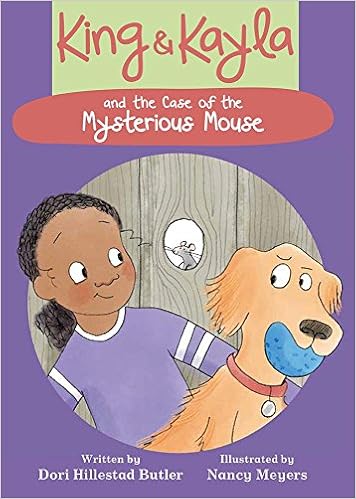
written by Dori Hillestad Butler
illustrated by Nancy Meyers
King’s ball is tossed over the fence. A “not-my-ball” comes back. The case is one: Find King’s missing ball. The Cat with No Name is no help, except giving the clue that Mouse took it. So where is this mouse? Read the book to find out if King and his pals can find his missing ball!
This book is part of a series that is sure to entertain budding chapter book readers.
The dust jacket description says: “The whole world is filled with big, enormous, gigantic, humongous, incredible numbers. Look all around you. You can see them in the sky, and in the grass, and in the forest, and in the ocean, and in the city. They are even in the pages of this book, just waiting for you–and your one and only imagination.”
Math teachers! This books shows HUGE numbers in both numeric and word form. It would be a great extension for any lesson teaching about large numbers and how to properly say them.
The back of the book teaches how to read such large numbers (most lessons only go to the millions or billions, but this book goes to the billion trillions — 21 zeros behind the number!)
The book itself is a story and lesson built into one! Any teacher looking to introduce how to add and subtract money, this book is your lesson!
David A Adler teaches the reader about the different dollars and coins used in the United States. He then shows how counting change really is just addition. He even gives the readers tasks to complete on various pages. The answers are given at the end of the book.
If you are looking to change up the way you teach money in a new and exciting way, Adler’s book is one you MUST check out!
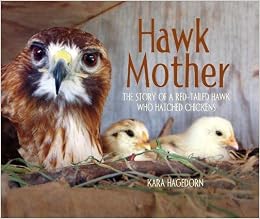
A heart-warming story of how an injured hawk, no longer able to fly due to a gunshot and broken wing! Sunshine (the Hawk) lays infertile eggs every spring and still attempts to hatch them. Each year her caretaker, Kara (the author), takes the eggs away which confuses Sunshine. One year Kara gets an idea and gets chicken eggs from her neighbor. Sunshine sits on those eggs as if they are her own, hatches them, and then raises the chicks as her own young.
For readers who love Little Pink Pup, Owen and Mzee, and other books that celebrate relationships of unlikely animals, you will love reading this nonfiction picture book.


 Posted by eh058